A common mistake we see on Oahu job sites is treating the entire island like uniform compacted basalt. Honolulu's subsurface is a patchwork of ancient lava flows, coralline marine deposits, and alluvial soft clays that can settle unevenly under load. A standard shallow footing might perform well in Kapahulu but fail in the compressible lagoonal deposits near Waikiki. Stone column design addresses this variability head-on. We adjust the column diameter, grid spacing, and gravel gradation to match the specific weak layer we are dealing with, whether it is saturated clay near the Ala Wai Canal or loose sandy fill in an older part of town. Before committing to a deep foundation system, many projects combine our design with an in-situ permeability test to understand how groundwater will interact with the drainage path created by the columns.
In Honolulu's coastal plains, a well-designed stone column grid can cut foundation settlement by half compared to untreated soft clay.
Scope of work in Honolulu
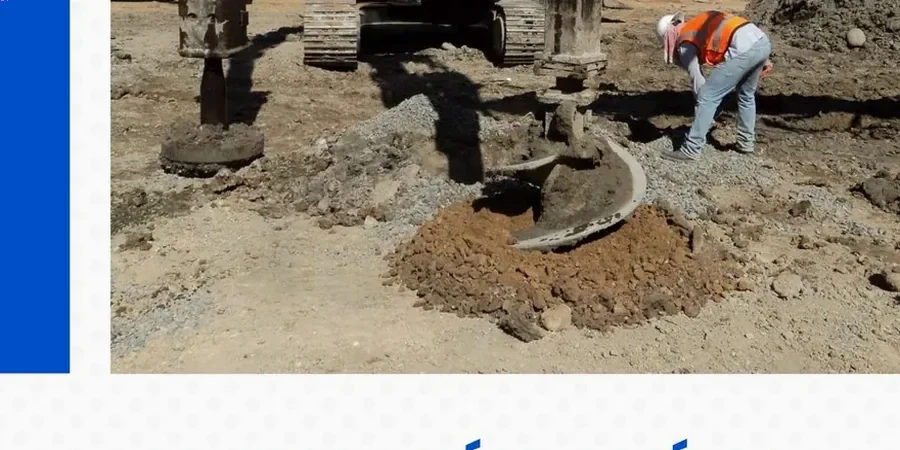
Typical technical challenges in Honolulu
The difference between building in Manoa Valley and down by the Kakaako waterfront is night and day. Manoa sits on stiff residual soils and colluvium that drain reasonably well. Kakaako and much of Honolulu's coastal edge are built on compressible lagoonal clays and loose calcareous sands that are susceptible to both static settlement and liquefaction during the frequent seismic events our island experiences. If you skip a proper stone column design here, you are risking differential settlement that can rack a structure's frame and crack slabs within the first year. The IBC classifies much of South Honolulu as Site Class E or F, meaning ground improvement is not optional; it is a code requirement. We apply the Priebe method for settlement calculation but always calibrate it against local SPT N-values because the standard reduction factors can be too optimistic for Oahu's highly sensitive organic silts.
Our services
Our ground improvement team handles the full stone column design scope for Honolulu projects, from feasibility to load test verification:
Design & Settlement Analysis
We calculate the composite shear strength and settlement reduction using site-specific SPT or CPT data. Designs are tailored for Honolulu's soft lagoonal clays and loose fills.
Aggregate Specification
We specify clean, durable basalt aggregate from Oahu quarries to meet ASTM gradation and permeability requirements, ensuring long-term drainage and column integrity.
Load Test Supervision
We supervise single-column and composite plate load tests to confirm the design meets IBC bearing capacity and settlement criteria before full production.
Questions and answers
How much does stone column design cost for a typical Honolulu project?
For most commercial or mid-rise projects in Honolulu, the design package including settlement analysis, column layout, aggregate spec and load test supervision runs between US$1,600 and US$4,970 depending on the number of borings to analyze and the complexity of the soil profile.
Are stone columns effective in Honolulu's volcanic soils?
They are very effective in the soft sedimentary layers and fills that sit on top of the basalt. Where basalt is shallow and fractured we sometimes switch to compaction grouting, but for the compressible clays and silts common in coastal Honolulu, vibro-replacement stone columns are a proven solution.
What standard do you follow for stone column design?
We follow the FHWA Ground Improvement Manual guidelines, applying the Priebe method for settlement. All designs comply with the IBC and ASCE 7 load requirements, and we reference ASTM D1586 and D2487 for soil and aggregate classification.
How long does the design process take?
Once we have the final geotechnical report with lab test results, a typical stone column design package takes about 5 to 8 working days. If load test supervision is required, we schedule that to align with the contractor's mobilization timeline.