Honolulu's construction environment sits at the collision of basalt geology and a corrosive marine atmosphere, where subsurface conditions can shift from stiff residual saprolite to compressible lagoonal mud within a single city block. Developers and structural engineers working in districts like Kakaako or near the Ala Wai Canal regularly face the challenge of characterizing these abrupt transitions before foundation design begins. The cone penetration test, executed with a 20-ton rig and a 15 cm² electronic friction sleeve cone, delivers a continuous high-resolution log of tip resistance, sleeve friction, and dynamic pore pressure that rotary borings simply cannot match. Because the groundwater table in Honolulu often sits within 2 to 3 meters of the surface—and can rise rapidly during winter Kona storms—we run dissipation tests at critical horizons to determine in-situ permeability and drainage behavior. The resulting data feeds directly into liquefaction assessments per ASCE 7-22 and bearing capacity calculations, giving structural engineers the precision needed to avoid over-excavation in tight urban lots. For deeper basalt interfaces or coralline ledges, we often pair the CPT profile with targeted spt-drilling to recover samples where refusal is met, ensuring no critical boundary goes unverified.
A single CPT sounding in Honolulu's Kakaako fill can map five distinct soil behavior types to 30 meters depth in under two hours, providing a continuous digital profile where rotary borings would require a week of lab testing.
Scope of work in Honolulu
Live process video
Typical technical challenges in Honolulu
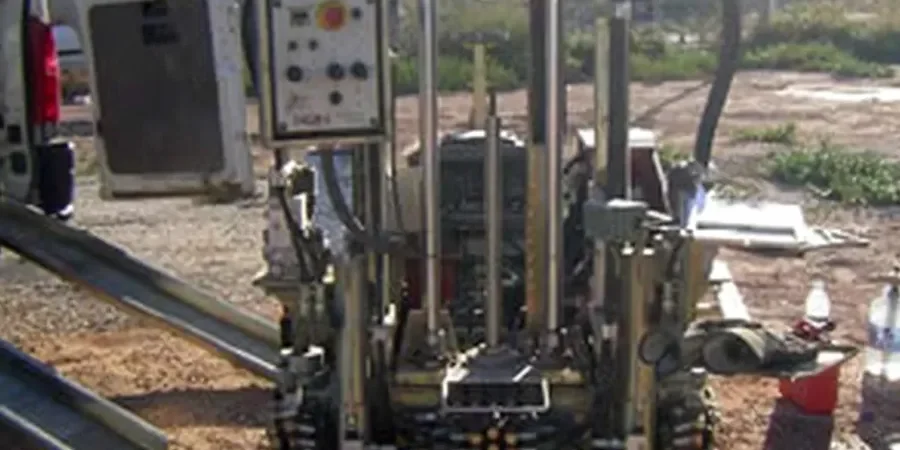
The 20-ton CPT truck deployed on Oahu carries a hydraulic ram capable of exerting 20 metric tons of reaction force, sufficient to push the cone string through dense calcareous sand and stiff saprolite that would defeat lighter rigs. In Honolulu's older neighborhoods—Manoa, Makiki, portions of downtown—we often deploy a tracked carrier with a reduced 2.3-meter width to access narrow easements without damaging established landscaping or underground utilities. The greatest risk in Honolulu CPT work is not refusal on basalt—that is expected and planned for—but rather lateral rod buckling in zones where a thin hard crust overlies soft saturated clay. Our operators monitor the inclinometer trace in real time; a deviation exceeding 2 degrees triggers an immediate stop and a redrive from 50 centimeters above the anomalous zone. All soundings within 5 kilometers of the shoreline also undergo mandatory pore pressure equalization checks at the water table interface, because a desaturated filter element can delay the dissipation response and mask the true hydrostatic profile—an error that has caused costly over-design of dewatering systems on past Honolulu projects.
Our services
Our Honolulu CPT program is supported by a full suite of complementary in-situ and laboratory services that complete the geotechnical picture when cone data alone leaves questions about strength, stiffness, or chemistry.
Seismic Cone (SCPTU)
Downhole shear wave velocity measurements taken at 1-meter intervals during the CPT advance, providing Vs profiles for site class determination per IBC Table 1613.2.3. Essential for Honolulu high-rise projects requiring seismic base shear calculations.
Piezocone Dissipation & Equilibrium Monitoring
Extended pore pressure dissipation tests at multiple depths with automated data logging. We track u2 decay curves until 50% consolidation is achieved, then extrapolate to in-situ equilibrium pressure using the Teh & Houlsby (1991) solution for coefficient of consolidation.
CPT-Based Liquefaction Analysis Package
Complete processing of CPT tip and sleeve data through the Boulanger & Idriss (2014) triggering framework, calculating factor of safety against liquefaction and post-earthquake volumetric strain at 0.1-meter depth increments for every saturated sand and silt layer encountered.
Questions and answers
What is the typical cost for a CPT sounding in Honolulu?
For a standard CPT sounding to 20 meters depth on Oahu, budget between US$190 and US$220 per meter mobilized, which includes the cone, push rods, data acquisition, and a preliminary SBTn soil behavior type log. Pricing varies based on site access constraints—sites requiring a tracked carrier in tight Honolulu lots add a modest mobility surcharge—and on whether seismic or dissipation modules are added to the test program.
How deep can CPT go in Honolulu's volcanic terrain?
Depth capacity in Honolulu is controlled by the underlying geology, not by the rig's push capacity. In the coastal plain and valley fill deposits—Waikiki, Moiliili, Mapunapuna—we routinely reach 25 to 30 meters before encountering basalt refusal. In upland areas like Tantalus or St. Louis Heights, saprolite thickness varies dramatically and refusal can occur anywhere from 5 to 20 meters. Our 20-ton rig will push until tip resistance exceeds approximately 50 MPa or rod friction approaches the safe thrust limit.
Do you need a drilling permit for CPT testing in Honolulu?
CPT soundings under 30 meters depth on private property in Honolulu generally do not trigger a separate drilling permit, but the work must comply with the City and County of Honolulu grading ordinance and any conditions in the building permit. We coordinate directly with the Department of Planning and Permitting (DPP) and Hawaii DLNR if the site is within the Special Management Area (SMA) boundary—which covers much of the coastal zone—to confirm no additional shoreline setback approvals are required.
Can CPT data replace soil borings for a Honolulu building permit?
Under IBC Section 1803, CPT soundings can satisfy the subsurface exploration requirement for many Honolulu projects, particularly when combined with at least one calibration boring to confirm the soil behavior type interpretation. The Hawaii DPP generally accepts CPT-based foundation recommendations when the report includes a registered geotechnical engineer's interpretation, the Robertson SBTn classification log, and direct bearing layer verification through tip resistance and friction ratio. For deep excavations or complex retaining structures, we typically recommend supplementing CPT profiles with undisturbed sampling for laboratory shear strength testing.