The most expensive mistake we see on Oahu projects is treating a raft foundation as a simple thickened slab on grade and ignoring the lateral spreading demands from Honolulu's compacted volcanic stratigraphy. Designers often copy a generic mat detail from a mainland project, only to discover excessive differential settlement once the building starts responding to the moisture-sensitive, plastic clays that drape the ridges from Makiki to Nuuanu. A proper raft/mat foundation design here must integrate the soil's seasonal shrink-swell potential with the structural stiffness required to span over soft lenses of coralline sand that are common in the low-lying areas near Ala Moana. When the subsurface investigation reveals variable infill or buried organic layers, we combine the in-situ permeability data with consolidation parameters to model realistic pressure bulbs under the mat footprint. For multi-story structures on basalt-derived saprolite, the raft behaves differently than on sedimentary ground, and the reinforcement layout needs to account for the high punching shear at column clusters where the rockhead drops abruptly. We approach each Honolulu site as a unique micro-basin, checking both bearing capacity and the long-term interaction between the concrete mass and the tropical weathering profile that defines Oahu's geotechnical character.
A Honolulu raft foundation must simultaneously resist bearing failure, seismic overturning, and the volumetric instability of tropical residual soils—three mechanisms that act on very different time scales.
Scope of work in Honolulu
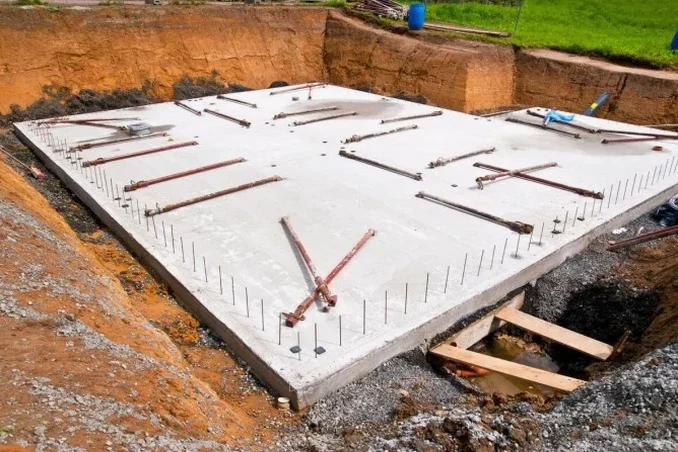
Typical technical challenges in Honolulu
Honolulu recorded a magnitude 6.7 earthquake in 2006 centered near Kiholo Bay, and while Oahu sits on the older, less active portion of the Hawaiian hotspot track, the island's volcanic edifice amplifies long-period ground motion in a way that catches structural engineers off guard. A raft/mat foundation on the deep, weathered saprolite profiles in the Honolulu urban core can undergo a dynamic response where the soil column resonates at a period close to the building's fundamental mode, multiplying the base shear demand beyond what a standard fixed-base analysis would predict. The IBC requires site-specific response spectra for Site Class D and E profiles, which are prevalent across the coastal plain from Pearl Harbor to Diamond Head, and ignoring this requirement leads to under-designed mat reinforcing and inadequate shear capacity at the column-to-raft interface. The other major exposure is the sulfate-rich groundwater that attacks conventional Portland cement; we specify Type V sulfate-resisting cement and supplementary cementitious materials as a minimum for any raft in the low-elevation zones where the water table fluctuates within the slab thickness.
Our services
Our raft/mat foundation design package for Honolulu covers the full analytical chain from subsurface characterization through construction-phase observation, with every calculation stamped by a Hawaii-licensed professional engineer.
Soil-Structure Interaction (SSI) Modeling
We build nonlinear Winkler spring models and continuum finite-element meshes in SAP2000 and PLAXIS 3D to capture the mat's real deformation pattern, using site-specific modulus reduction curves derived from our lab consolidation and triaxial data.
Seismic Demand & Liquefaction Analysis
Site-specific response spectra per ASCE 7-16 Chapter 21, plus liquefaction triggering and settlement estimates for the coralline sand layers found in Honolulu's coastal fill zones, using both SPT and CPT-based simplified procedures.
Construction-Phase QA/QC & Instrumentation
We monitor mat concrete temperature during curing, verify reinforcement placement against the high-seismic detailing requirements, and install settlement monuments and tiltmeters for the critical first 6 months of structural loading.
Questions and answers
What does raft/mat foundation design cost for a typical Honolulu building lot?
For a standard residential or small commercial raft foundation on Oahu, the design fee ranges from US$900 to US$3,740 depending on the footprint size, number of column loads, and whether a site-specific seismic response spectrum is required. Complex sites with deep basalt irregularities or liquefiable fill layers fall at the upper end due to the additional finite-element modeling and peer review coordination.
How does the coral rubble fill common in Honolulu affect raft foundation design?
Coral rubble and calcareous sand fills, widespread in the Ala Moana, Kakaako, and Waikiki areas, have high void ratios and crushable grain structure. Under the sustained pressure from a raft foundation, these materials can undergo particle breakage and sudden volume reduction. Our design accounts for this by running one-dimensional compression tests on undisturbed samples and applying a reduced bearing capacity factor that reflects the grain crushing potential, often resulting in a thicker mat or a deeper excavation to replace the upper few feet of fill with engineered structural fill.
What is the design process timeline from investigation to stamped drawings?
Once the field investigation is complete—typically 2 to 3 weeks for a standard Honolulu lot including SPT borings and CPT soundings—the analysis and design phase runs 3 to 4 weeks. This includes interpreting the lab consolidation and triaxial results, developing the soil spring model, running the structural analysis, and preparing the reinforcement and post-tensioning drawings. Hawaii County or City and County of Honolulu permit review can add 2 to 6 weeks depending on the project scale and whether a geotechnical peer review is triggered.