A hillside residence in Manoa started showing hairline cracks after a heavy Kona low storm, and the owner couldn’t figure out why. The original grading plan looked fine on paper, but nobody accounted for the saprolite layer that had softened to less than 15 kPa cohesion after a week of saturation. That’s the kind of scenario we walk into regularly across Honolulu. Between the basaltic residual soils, deeply weathered ridgelines, and the annual rainfall pushing 50 inches in the Ko‘olau Range, slope stability here isn’t just a textbook exercise — it’s a site-specific puzzle. We run limit equilibrium analysis and finite element models informed by ASTM D1586 SPT drilling to pin down the shear strength of these colluvial and residual profiles before anyone cuts a bench or pours a retaining wall footing.
Honolulu’s residual soils can lose 40% of their shear strength in less than 48 hours under sustained rainfall — that’s not a code assumption, that’s field data.
Scope of work in Honolulu
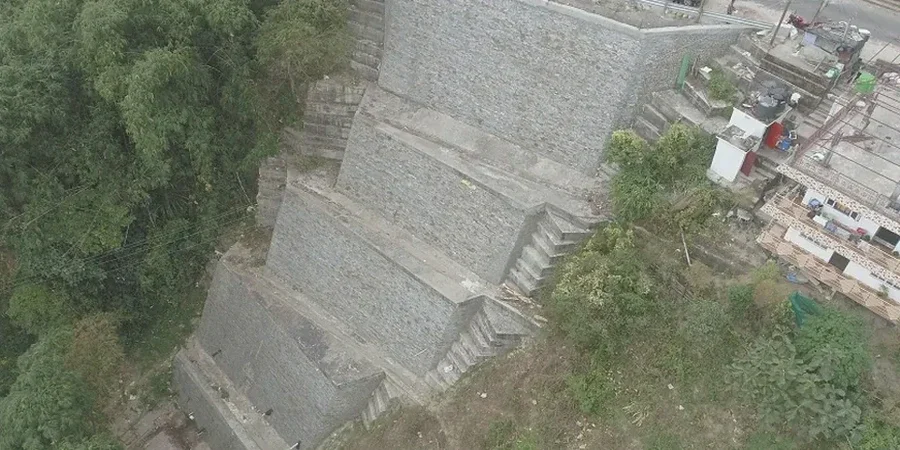
Typical technical challenges in Honolulu
The mistake we see repeatedly is developers treating Honolulu’s volcanic slopes like granitic cuts on the mainland — assuming rock is rock — and then the saprolite slides during excavation. A shallow failure in weathered Koolau basalt can move a few thousand cubic yards of material fast enough to bury the work zone. The real danger isn’t just the slide mass; it’s the loss of lateral support for adjacent properties, which in neighborhoods like Nu‘uanu or Pacific Heights means a lawsuit and a stop-work order that can stretch past a year. Honolulu’s grading ordinance requires a geotechnical evaluation for slopes steeper than 3H:1V, and the IBC 2021 references ASCE 7 for seismic slope stability — if the analysis isn’t site-specific and doesn’t include pore pressure buildup, it won’t hold up in review.
Our services
Our Honolulu slope stability work covers everything from preliminary feasibility studies for hillside subdivisions to forensic analysis of existing landslides. Each engagement is led by a licensed geotechnical engineer familiar with O‘ahu’s unique volcanic stratigraphy.
Static and Seismic Slope Stability Modeling
We build 2D and 3D limit equilibrium models (SLOPE/W and Slide3) calibrated with site-specific shear strength data from SPT borings and laboratory triaxial tests. Every model includes the Honolulu seismic design parameters per IBC 2021, and we report factors of safety for both drained long-term and undrained end-of-construction conditions.
Rainfall-Induced Failure Assessment
For slopes in the Ko‘olau and Wai‘anae ranges, we run transient seepage analyses coupled with slope stability to simulate saturation fronts during extreme rainfall events. This is critical for properties in flood-prone zones where antecedent moisture can trigger shallow translational slides in colluvial soils.
Questions and answers
What triggers a slope stability study under Honolulu’s grading ordinance?
The City and County of Honolulu requires a geotechnical report with slope stability analysis for any cut or fill exceeding 15 feet in height, any slope steeper than 3 feet horizontal to 1 foot vertical, and any grading within a designated erosion hazard zone. Even if your project is under these thresholds, the building official can request an analysis if the site is adjacent to a known landslide area or if the soils report indicates potentially unstable conditions.
How much does a slope stability analysis cost for a typical Honolulu residential lot?
For a standard hillside residential project on O‘ahu, a complete slope stability analysis — including site investigation, laboratory shear strength testing, and the stability modeling report — typically falls between US$1,440 and US$4,630. The range depends on the number of cross-sections analyzed, whether transient groundwater modeling is needed, and how much subsurface data is already available from prior borings.
Do you need to drill borings for every slope stability analysis?
Almost always. You cannot determine shear strength parameters for residual volcanic soils from surface mapping alone, especially in Honolulu where the saprolite thickness varies from 5 to over 40 feet across a single ridge. We use SPT borings per ASTM D1586 to collect disturbed and undisturbed samples, then run laboratory tests to get the cohesion and friction angle values that feed the stability model.
What safety factor does the Honolulu building department accept?
Under IBC 2021 and ASCE 7-22, the minimum factor of safety for static long-term slope stability is 1.5. For temporary construction slopes open less than six months, 1.3 is generally accepted. For seismic conditions, the minimum is 1.1 when using the design earthquake ground motion for Honolulu’s Seismic Design Category D. We include all three cases in our reports to keep the permitting review moving without back-and-forth.
How long does the analysis take from field work to final report?
A typical Honolulu slope stability study takes three to four weeks. The first week covers drilling and sampling, the second week is laboratory testing for shear strength, and the final one to two weeks are dedicated to building and iterating the stability model and preparing the stamped report. If the project is time-sensitive and the site geology is straightforward, we can compress the schedule to two weeks.