The biggest mistake we see on Oahu job sites is treating Honolulu's volcanic subgrade like mainland clay. A standard rigid pavement design that works fine in Phoenix crumbles here within five years. The culprit is almost always poor load transfer across joints on basaltic soils that expand and contract with moisture cycles unique to the windward side. Our lab runs full ASTM D2487 classification before we ever draft a joint layout, because if you miss the fines content in that red Koolau basalt residue, you are going to get pumping at every slab edge. We integrate plate load testing when the subgrade reaction modulus needs verification beyond what a standard DCP can provide, especially on fill sections near the H-1 corridor where compaction varies drastically across short distances.
Honolulu's basaltic subgrade demands a joint spacing ratio of 24-to-1, not the 30-to-1 common on the mainland.
Scope of work in Honolulu
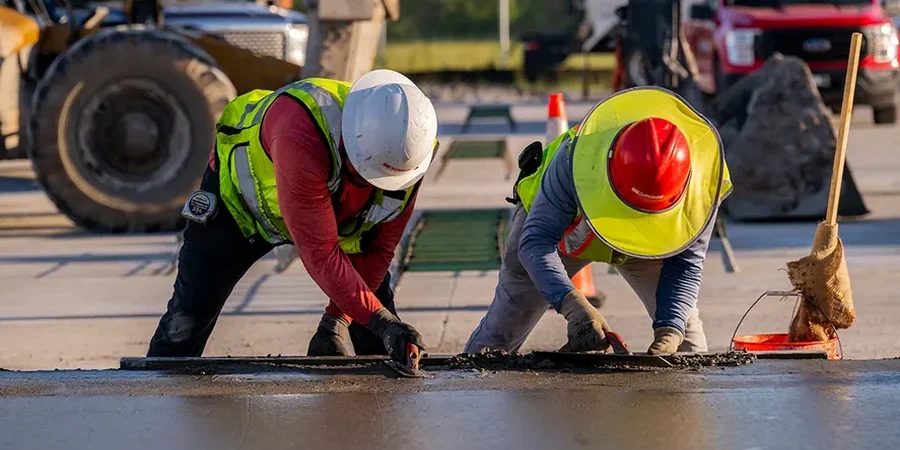
Typical technical challenges in Honolulu
Honolulu sits at 21.3 degrees north latitude, and our 19-foot average rainfall on the Ko'olau range means water is the enemy of every rigid pavement in this city. In 2006, the Kailua area saw 14 inches of rain in 24 hours, and dozens of commercial parking lots with poorly sealed joints failed within weeks as water penetrated to the subgrade. A rigid pavement design in Honolulu that does not include a drainage layer or edge drains on any section with more than 1% grade is a warranty claim waiting to happen. The Hawaii DOT standard specifications now require daylighted subbase drainage on all arterial roads, and we follow the same principle for private projects. Pumping at transverse joints remains the number one distress mechanism we document during forensic investigations on Oahu. Once water saturates the base and traffic loads flex the slab corner, fines migrate upward and create a void that leads to corner breaks within two rainy seasons. Our rigid pavement designs specify backer rod and silicone sealant at every joint, no exceptions for low-traffic areas, because Honolulu's UV index accelerates sealant degradation and a cheap hot-pour sealant will crack open in 18 months.
Our services
Our rigid pavement engineering in Honolulu covers the full design sequence from geotechnical investigation through joint detailing. We work directly with structural engineers and contractors to produce biddable drawings and specs.
PCC Joint Layout & Detailing
We design transverse contraction joints, longitudinal joints, and isolation joints specific to Honolulu's temperature range and subgrade friction. Our layouts include dowel bar schedules, tie bar spacing, and sealant specifications that meet Hawaii DOT requirements for all arterial and collector roads.
Subgrade Stabilization for Rigid Pavements
When the existing Honolulu subgrade shows CBR values below 3 or plasticity index above 15, we design cement-treated base layers or lime stabilization programs. We test treated samples in our lab for unconfined compressive strength at 7 days before finalizing the rigid pavement section.
Questions and answers
What is the cost range for a rigid pavement design in Honolulu?
A complete rigid pavement design package for a typical Honolulu commercial site runs between US$2.000 and US$5.760, depending on the project size, number of soil borings required, and whether we need to run plate load tests for the k-value determination. Smaller residential driveways are on the lower end; full parking lots with drainage design and Hawaii DOT submittals are on the upper end.
How do you determine joint spacing for Honolulu's climate?
We calculate joint spacing as a ratio of slab thickness to radius of relative stiffness, considering Honolulu's typical 10-12°F daily temperature swing and the coefficient of thermal expansion for our basalt aggregate mixes. For a 6-inch slab on a k-value of 200 pci, we typically specify 12-foot joint spacing maximum, which is tighter than mainland designs because our high humidity accelerates curling stresses.
Does Hawaii DOT accept your rigid pavement designs?
Yes. Our designs reference AASHTO 1993 and the current Hawaii DOT Standard Specifications Section 601 for rigid pavement. We coordinate directly with HDOT reviewers on state-funded projects and have experience with the submittal process for federal-aid highways on Oahu.