Honolulu sits on a sequence of volcanic basalt, coralline limestone, and marine sediments that shift from hard rock to compressible lagoonal clay within a single city block. The high water table across the southern coastal plain—often less than 2 meters below grade in Waikiki and Kakaako—turns excavation into a dewatering exercise before any foundation work begins. A soil mechanics study here must account for the saprolitic transition zones where weathered basalt behaves like dense silt but retains the hydraulic conductivity of fractured rock. Our laboratory runs triaxial, consolidation, and direct shear tests calibrated to these local formations, giving structural engineers the parameters they need under IBC Chapter 18 and the Honolulu Building Code amendments for seismic design category D. Without this site-specific data, standard bearing capacity assumptions from mainland manuals fail fast on island geology.
Oahu's volcanic saprolite transitions from rock to soil unpredictably—standard penetration resistance alone cannot characterize it.
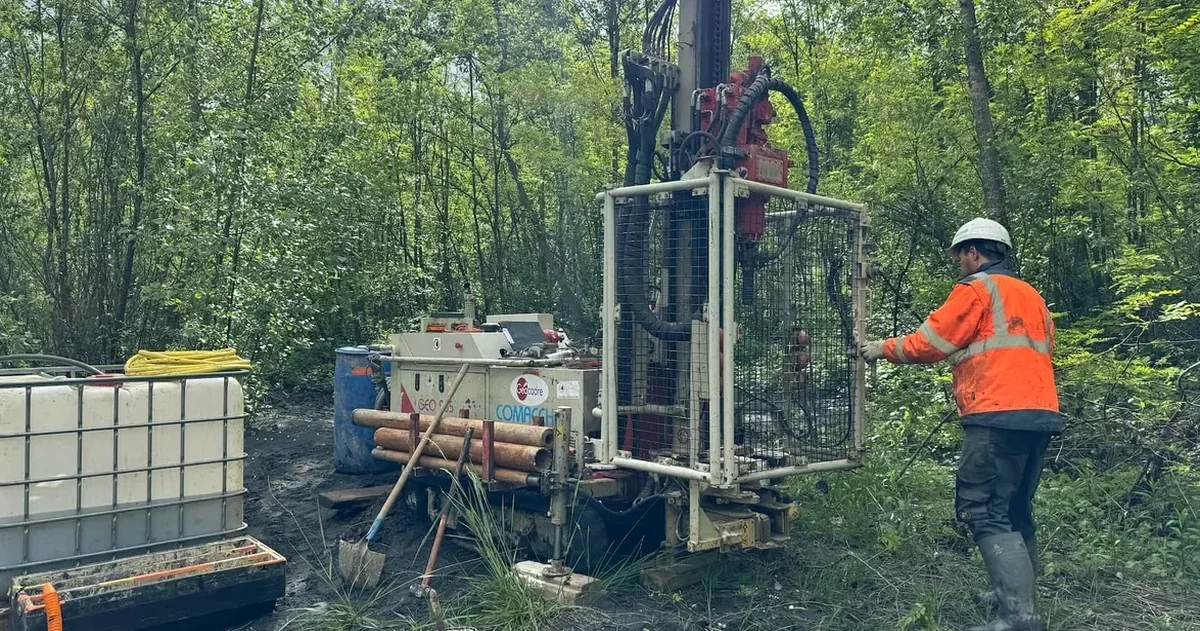
Scope of work in Honolulu
Typical technical challenges in Honolulu
A common mistake on Honolulu projects is treating the coralline fill layer as a uniform bearing stratum without checking for dissolution cavities. We have seen contractors drive piles through apparently competent limestone only to lose grout volume into a void the size of a pickup truck. Another frequent error involves ignoring the seasonal groundwater fluctuation: the water table in the Honolulu coastal plain rises during winter Kona storms, saturating the silty fine sands that dominate the Ala Moana area and dropping their effective friction angle enough to trigger lateral spread in excavations. A soil mechanics study that only looks at dry-season data misses the critical undrained condition. The Honolulu Building Code requires a geotechnical investigation for any structure over two stories, but the scope of that investigation makes the difference between a foundation that performs and one that requires underpinning within five years.
Our services
Our Honolulu lab provides the full suite of soil mechanics testing and interpretation needed for IBC-compliant foundation design on Oahu's variable ground.
Foundation Parameter Testing
Triaxial compression, direct shear, and consolidation tests on undisturbed samples from Honolulu formations. We deliver friction angle, cohesion, and settlement curves ready for shallow and deep foundation design per ASCE 7.
Seismic Ground Response Analysis
Site-specific soil mechanics parameters for seismic design category D structures. Includes shear wave velocity correlation, liquefaction screening on coralline sands, and modulus reduction curves for time-history analysis.
Questions and answers
How deep are typical borings for a soil mechanics study in Honolulu?
The IBC requires borings to extend through all compressible strata and at least 10 feet into competent bearing material. In Honolulu's coastal plain, that often means 30 to 60 feet, depending on the depth to coralline limestone or basalt bedrock. For deep foundations, borings go deeper—typically two times the pile length below the tip.
Do you test for sulfate attack on concrete foundations in Honolulu?
Yes. The marine sediments and fill common in Honolulu's low-lying areas often carry elevated sulfate concentrations. We run water-soluble sulfate tests per ASTM C1580 and provide exposure class recommendations for Type II or Type V cement if the concentration exceeds IBC Table 1904.3 thresholds.
What does a soil mechanics study cost for a typical Honolulu residential lot?
For a standard single-family residential investigation on Oahu, including drilling, sampling, laboratory testing, and a geotechnical report with foundation recommendations, costs typically range from US$3,570 to US$5,610 depending on access, depth, and the number of borings required.