Honolulu's tropical semi-arid climate, with its intense seasonal downpours on the Ko'olau Range, creates a deceptive saturation profile in the subsurface. What looks like stable basalt can conceal perched water tables within highly fractured lava flows or ancient, weathered ash beds. Any deep foundation or basement excavation on this island must account for hydraulic conductivity values that can swing three orders of magnitude within a single borehole. The Lefranc test provides accurate point measurements in soil and highly weathered rock, while the Lugeon test quantifies fracture flow in the underlying competent basalt. Without this on-site data, dewatering estimates become guesswork and grouting programs miss their targets. We run these tests under the protocols of ASTM D4630 and the U.S. Bureau of Reclamation's field standards, adapting the setup to Honolulu's specific mix of coralline fill, saprolite, and basalt. For projects near the water table in Waikiki, combining this data with a CPT test often clarifies the transition zones where silty marine sediments meet reef limestone, refining the hydrogeologic model before a single shoring soldier pile is installed.
One Lugeon value above 5 in a basalt layer can reshape the entire dewatering budget for a Honolulu high-rise excavation.
Scope of work in Honolulu
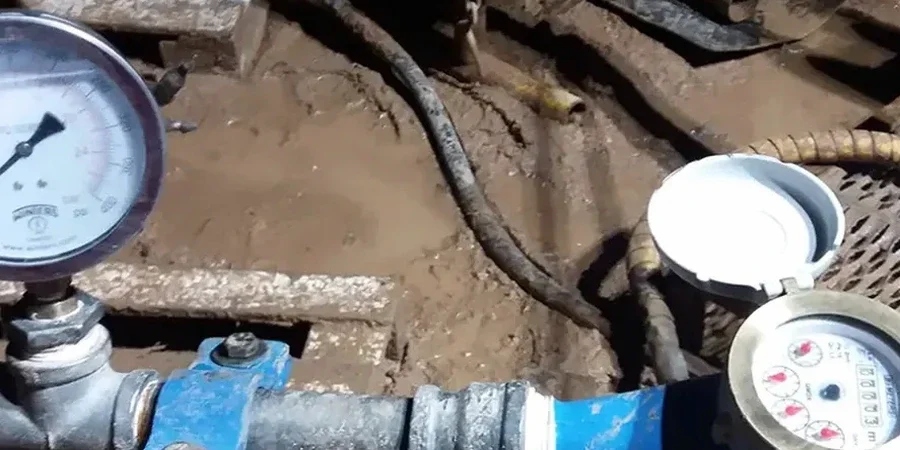
Live process video
Typical technical challenges in Honolulu
Underestimating permeability in Honolulu's layered volcanic profile carries immediate structural and financial consequences. The IBC Chapter 18 and ASCE 7-22 require that foundation designs account for realistic groundwater pressures, and the Honolulu Building Department enforces these provisions strictly for excavations over 12 feet deep. A missed high-permeability zone in fractured basalt can flood a shored excavation within hours, eroding fines from behind soldier beams and triggering street-level settlements along Kapiolani Boulevard. In tunneling through the Honolulu rail corridor, Lugeon values exceeding 10 units have historically demanded extensive pre-excavation grouting to limit inflow below contractual thresholds. The Lefranc test, when omitted in coastal fill zones, leads to undersized sump pumps that cannot handle tidal lag infiltration. We have seen projects in Kakaako where re-design costs after a groundwater surprise exceeded the original field investigation budget by a factor of six; the data from a targeted test program would have eliminated that risk during the pre-construction phase.
Our services
Our field permeability testing program in Honolulu integrates directly with geotechnical investigation and ground improvement scopes, providing the hydraulic data that drives design decisions:
Lefranc Testing in Overburden
Constant-head and falling-head tests run in soil and saprolite layers using inflatable packers to isolate specific horizons. We provide K values per interval, with full pressure-time logs and temperature correction applied.
Lugeon Testing in Basalt
Pressurized water tests in 5-meter stages within competent rock, following USBR procedures. Results classify fracture permeability from tight (<1 Lu) to highly open (>100 Lu), guiding grouting and drainage design.
Integrated Hydrogeologic Profiling
Combined Lefranc-Lugeon sequences in a single borehole, synchronized with core logging and televiewer surveys, to build a complete permeability profile across soil, saprolite, and rock for deep excavation and tunneling projects.
Questions and answers
What is the typical cost range for a Lefranc or Lugeon test in Honolulu?
Field permeability tests in the Honolulu area generally fall between US$710 and US$960 per test interval, depending on depth, access conditions, and whether packer systems or slotted casing setups are required. Mobilization and decommissioning are quoted separately. A full program with multiple intervals typically yields better unit rates.
When should we specify a Lugeon test instead of a Lefranc test?
The Lugeon test applies specifically to rock formations. In Honolulu, once you encounter competent Koolau basalt below the saprolite, switch to Lugeon to measure fracture flow. The Lefranc test remains the correct choice for soil, fill, and highly weathered rock intervals where the borehole walls will not sustain packer inflation.
How do you ensure the test results reflect true formation permeability and not just drilling disturbance?
We flush the test interval thoroughly before each stage, monitor turbidity, and run step-pressure sequences in Lugeon tests to detect fracture dilation or infilling. For Lefranc tests, we use a carefully graded gravel pack and confirm seal integrity with dye tracers. The pressure transducer data is reviewed in real time to identify non-laminar flow behaviors that would invalidate the standard interpretation.