A contractor we worked with on Keeaumoku Street nearly lost a footing inspection because the fill layer was thicker than the borelogs suggested. In Honolulu, the transition between Manoa valley alluvium and the underlying Koolau basalt is rarely a clean line—it meanders, it pinches, it drops. Shallow foundation design here means reconciling the IBC’s presumptive bearing values with what the ground actually gives you. We run the plate load test when the site is accessible and the schedule allows, or we correlate SPT N-values from sondaje SPT borings when the structural engineer needs numbers fast. Either way, the deliverable is a set of allowable bearing pressures and settlement curves that a local plan checker will accept without a dozen RFIs. Honolulu’s building department sees volcanic residual soils every week, so they know when a report is honest.
Honolulu’s volcanic saprolite looks like clay but often behaves like silt—skip the Atterberg limits on this soil and you’ll overdesign the footing by 20 percent.
Scope of work in Honolulu
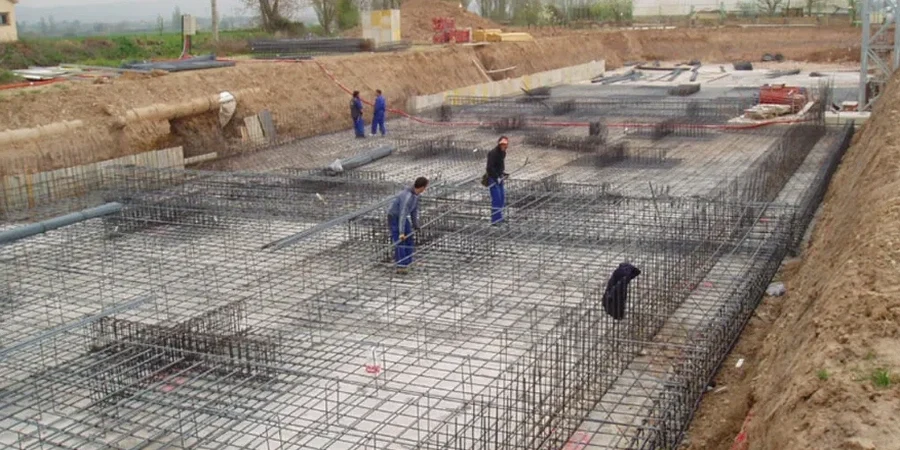
Typical technical challenges in Honolulu
Honolulu sits at just 6 meters above sea level across much of its urban core, and the 2006 Kiholo Bay earthquake—a magnitude 6.7 event centered on the Big Island—still rattled high-rise foundations on Oahu enough to trigger a wave of seismic retrofit evaluations. A shallow foundation designed without site-specific shear wave data can underestimate the cyclic settlement in saturated coralline sands by a factor of two. We have seen footing rotation on Kona-side slopes where the fill was placed over weathered basalt without a key, and the repair cost ran well past the original foundation budget. The IBC 2024 references ASCE 7-22 for seismic ground motion parameters, but the mapped values for Honolulu’s coastal zone do not capture the amplification that occurs where the basalt bedrock dips beneath softer alluvium—a condition we flag with a seismic microzonation review when the project is over three stories.
Our services
Our Honolulu lab runs the full chain from field sampling to the final bearing capacity report. These three service blocks cover what most Oahu projects need.
Bearing Capacity Verification
We correlate SPT N60 values with laboratory shear strength parameters to deliver factored net allowable bearing pressures for isolated footings, strip footings, and mat foundations. Every calculation includes a sensitivity check for groundwater rise to within 1.5 meters of the bearing elevation.
Settlement Analysis
One-dimensional consolidation tests on undisturbed Shelby tube samples, plus elastic settlement estimates from Schmertmann’s method. We report immediate, primary consolidation, and secondary compression components separately so the structural engineer can phase the loading sequence.
Fill and Subgrade Evaluation
In Honolulu’s older neighborhoods, imported fill over basalt is the rule, not the exception. We log the fill thickness, test its compaction via sand cone density, and determine whether the natural subgrade can support the design load without deep improvement.
Questions and answers
What is the typical price range for a shallow foundation design package in Honolulu?
A complete package—site investigation, lab testing (classification plus shear strength), and the geotechnical report with bearing capacity and settlement analysis—usually falls between US$1,840 and US$3,350. The spread depends on the number of borings, whether we need a plate load test, and how many footing types the structural engineer requires. A simple residential footing on a single lot will sit at the lower end; a mixed-use podium slab in Kakaako with multiple column loads will push toward the upper end.
How does the IBC handle shallow foundations on Honolulu’s volcanic soils?
IBC Section 1806 allows presumptive bearing values for engineered fill and natural soils, but Table 1806.2 does not list basalt saprolite explicitly. For that reason, most Honolulu building officials require site-specific data—either a plate load test or a geotechnical report backed by SPT borings and lab shear tests—to justify any bearing pressure above 100 kPa. We also need to address the seismic provisions of ASCE 7-22 Section 12.13, which governs foundation ties and overturning resistance.
What is the most common shallow foundation failure mode you see on Oahu?
Differential settlement caused by inconsistent fill thickness over irregular basalt bedrock. The footing at one column bears on competent saprolite while the adjacent column sits over eight feet of loose red dirt that was pushed there during subdivision grading. The fix usually involves undercutting the fill and backfilling with compacted aggregate, but catching it during the design phase saves a lot of concrete. We map the bedrock profile with SPT refusal depth and sometimes a short seismic refraction line when the site is large enough.