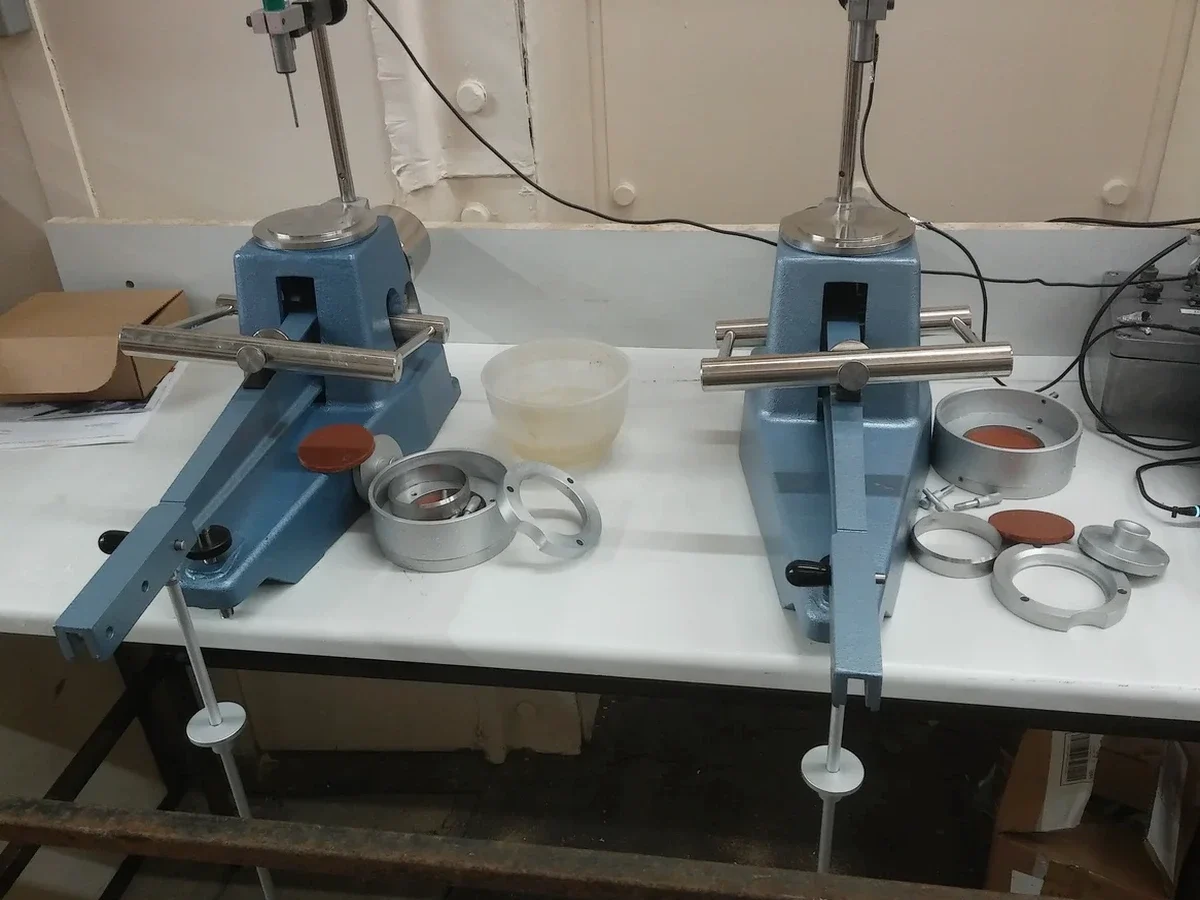
Honolulu’s unique geologic setting—where basaltic lava flows weathered into deep residual clays meet coastal alluvium—demands precise fine-grained soil classification under ASTM D4318. The International Building Code (IBC) Section 1803, adopted by the City and County of Honolulu, requires Atterberg limits whenever silts or clays are encountered in foundation investigations. On Oahu’s windward side, deeply weathered saprolites from the Koʻolau Range produce kaolinitic soils whose liquid limit and plasticity index directly control expansive behavior in residential slabs. Near the Ala Wai Canal and Waikīkī, marine and estuarine deposits with high organic content must be characterized before any deep excavation or pile design proceeds. Our laboratory team applies the Casagrande cup method and thread-rolling procedure to establish liquid limit, plastic limit, and derived plasticity index, feeding these values into the Unified Soil Classification System (USCS) per ASTM D2487. The resulting group symbols—CL, CH, MH, or OH—determine appropriate foundation type and drainage design. For sites near Diamond Head with volcanic ash horizons, we often pair Atterberg testing with grain size analysis to confirm fines content before final USCS designation.
Honolulu residual clays frequently plot above the A-line as CH material—expect liquid limits exceeding 50 percent and corresponding swell pressures that must be addressed in slab-on-grade design.
Scope of work in Honolulu
Typical technical challenges in Honolulu
A common mistake on Honolulu construction projects is classifying Oahu’s saprolitic silts as low-plasticity ML material based solely on visual-manual description, skipping the Atterberg test. These weathered in-situ soils from the Koolau Basalt often contain halloysite clay minerals that produce liquid limits above 50 percent—placing them as MH or CH—and exhibit significant volume change with seasonal moisture fluctuation. A foundation designed for ML silt assumptions will underestimate swell pressures and differential movement, leading to slab cracking within the first wet season. Another recurring issue involves marine clays near Honolulu Harbor: organic content skews the liquid limit upward, and if the ASTM D4318 oven-drying method is applied without accounting for organic matter oxidation, the resulting plasticity index misrepresents field behavior. We have seen projects where ignoring Atterberg testing on coastal plain deposits resulted in retaining wall backfill failing free-drainage criteria, requiring costly retrofit drainage systems after the first Kona storm saturated the clayey fill.
Our services
Our Honolulu geotechnical laboratory provides Atterberg limits testing as part of a complete fine-grained soil characterization package. Turnaround is typically 3 to 5 business days for multi-point liquid limit and plastic limit determination. We serve general contractors, structural engineers, and geotechnical consultants across Oahu, from Kailua to ʻEwa Beach.
Multi-Point Liquid Limit (Casagrande Cup)
Full ASTM D4318 procedure with 3-4 moisture content points, flow curve generation, and liquid limit determination at 25 blows. Required for definitive USCS classification of Honolulu residual clays and coastal sediments.
Plastic Limit and Plasticity Index
Thread-rolling method on minus No. 40 fraction. Plasticity index calculation (LL minus PL) for swell potential assessment and A-line classification per the Casagrande plasticity chart in ASTM D2487.
One-Point Liquid Limit (Rapid Screening)
Correlation-based single-point method for projects requiring Atterberg classification across multiple test pit samples on the same Honolulu parcel. Suitable for preliminary site characterization when budget or schedule constraints apply.
Questions and answers
How much does Atterberg limits testing cost for a Honolulu project?
Atterberg limits testing (liquid limit, plastic limit, and plasticity index) typically ranges from US$50 to US$80 per sample when performed as part of a larger geotechnical laboratory package. Standalone single-sample testing may fall at the upper end of that range. We provide firm quotes based on sample count and required turnaround time.
Why are Atterberg limits important for Honolulu’s volcanic residual soils?
Oahu’s residual soils derived from basalt weathering often contain halloysite and kaolinite clay minerals that produce high liquid limits and plasticity indices, even when they appear silty in the field. Atterberg testing quantifies this plasticity, which directly controls swell-shrink behavior, allowable bearing capacity, and foundation design parameters under the Honolulu Building Code. Without this data, slab-on-grade and shallow footing designs risk underestimating differential movement.
What sample size is needed for Atterberg testing per ASTM D4318?
We require approximately 300 grams of material passing the No. 40 sieve (0.425 mm) for a full multi-point liquid limit and plastic limit determination. The sample should be taken from a representative disturbed bag sample of the fine-grained stratum. If only a small quantity is available, we can run the one-point liquid limit method with as little as 150 grams of minus No. 40 material, though the multi-point method remains the definitive procedure.